Source Fixed Motor Run Capacitor for AC, Fan, and Power Applications
Explore 30 listings for the Fixed Motor Run Capacitor, comparing specifications like capacitance, voltage, and certifications. Buyers can evaluate options for air conditioners, fans, and general power applications with varying MOQs and prices.
Key considerations
Products List




Comprehensive Sourcing Guide
Strategic Sourcing Guide for Fixed Motor Run Capacitors
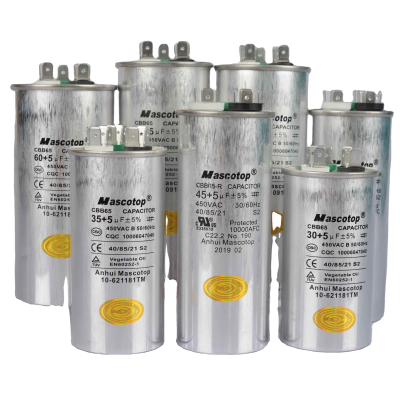
Procuring fixed motor run capacitors requires a disciplined approach that balances technical compatibility with supply chain reliability. These components are critical for maintaining the phase shift necessary to start and run single-phase AC motors efficiently. The market offers a diverse array of options, ranging from general-purpose units to specialized models designed for specific industrial or residential applications. Buyers must navigate a landscape where product attributes vary significantly between listings, necessitating a verification process grounded in the specific data points available rather than generalized assumptions.
Technical Specifications and Capacitance Verification
The most critical parameter in selecting a Fixed Motor Run Capacitor is the capacitance value, which directly influences the motor's torque and efficiency. In the current market, observed capacitance ranges span from 1 microfarad (uF) up to 100 microfarads (uF), with specific models frequently cited at 10uF, 7.5uF, 15uF, 17.5uF, 25uF, and 30uF. It is essential to note that while some listings suggest a broad range of 50-100uF, others indicate a range of 1-50uF, highlighting the variability in product definitions across different suppliers. Buyers must not assume a single standard range applies to all products; instead, they must verify the exact microfarad rating against the motor's nameplate requirements.
The physical structure of these capacitors is predominantly fixed, meaning they are not adjustable once installed. The internal construction often utilizes polypropylene as the manufacturing material, which is preferred for its stability and low loss characteristics in AC applications. However, some product descriptions also reference aluminum electrolytic types or liquid tantalum filters, indicating a need for careful distinction between dielectric materials. The dielectric material determines the capacitor's frequency response and suitability for specific usage scenarios, such as low-frequency coupling or high-frequency bypass. For motor run applications, polypropylene dielectrics are generally the standard for their ability to handle continuous AC voltage without significant degradation.
Compliance, Certification, and Safety Standards
Ensuring that a Fixed Motor Run Capacitor meets international safety and environmental standards is a non-negotiable aspect of B2B procurement. The observed market data indicates a variety of certifications, including UL, CE, RoHS, CQC, and ISO standards. Some suppliers list comprehensive compliance packages such as "CE, RoHS, UL, ISO," while others may specify only "UL" or "CBB61" as a standard reference. The CBB61 designation, in particular, often refers to a specific type of metallized polypropylene film capacitor widely used in motor applications, serving as both a model identifier and a quality benchmark in certain regions.
Buyers must verify that the supplier can provide valid certification documents that match the specific product model. For instance, a capacitor intended for use in the European market must strictly adhere to CE and RoHS directives, while products for the North American market typically require UL recognition. The presence of ISO 9001 certification suggests a supplier's commitment to quality management systems, but it does not guarantee the specific performance of the capacitor itself. Additionally, the "High Quality Standard" and "Good Quality" attributes observed in listings are subjective claims that must be substantiated by third-party test reports or the specific certifications mentioned. Relying solely on a supplier's assertion of "High Quality" without verifying the corresponding certification numbers is a significant procurement risk.
Cost Drivers and Pricing Dynamics
The pricing of fixed motor run capacitors is influenced by several factors, including capacitance value, voltage rating, physical dimensions, and the complexity of the manufacturing process. The observed price range in the market is extensive, spanning from $0.09 to $3,180. This wide disparity suggests that the market includes both low-cost, high-volume consumer-grade components and specialized, high-voltage industrial units. The "Cheap" and "Low" price attributes found in product descriptions should be interpreted as relative terms rather than absolute guarantees of value.
Minimum Order Quantity (MOQ) is another significant driver of cost efficiency. The data shows MOQs ranging from 1 unit to 5,000 units, with common thresholds observed at 50 pieces and 100 pieces. Suppliers offering an MOQ of 50 PCS or 100 PCS may provide more flexibility for small-to-medium enterprises, whereas those requiring 5,000 units are likely targeting large-scale industrial distributors. Buyers should calculate the total landed cost, which includes the unit price, shipping, and potential duties, rather than focusing solely on the per-unit price. The availability of free samples is a valuable attribute that allows buyers to validate the physical quality and specifications before committing to a larger order, effectively reducing the risk of purchasing non-compliant inventory.
Typical Applications and Usage Scenarios
Fixed motor run capacitors are primarily designed for continuous duty applications where the capacitor remains in the circuit while the motor is running. The observed application data points to a strong concentration in air conditioning units, power systems, and AC motors. Specific use cases include home appliances, fans, and general-purpose industrial machinery. The versatility of these components is evident in their usage classifications, which range from low-frequency coupling to high-frequency bypass and coupling.
For air conditioning applications, the capacitor must withstand the high thermal loads and continuous cycling typical of HVAC systems. The "Air Conditioner" and "AC / Motor" labels in product descriptions confirm this primary use case. In power applications, the capacitor must handle potential voltage spikes and maintain stability under varying load conditions. The "Direct Cooling" and "Indirect Cooling" attributes suggest that thermal management is a consideration for some models, particularly those used in high-power or enclosed environments. Buyers should match the capacitor's thermal rating and cooling method to the specific operating environment of the motor to prevent premature failure.
Supplier Evaluation and Geographic Considerations
When evaluating suppliers, geographic origin plays a role in logistics and regulatory compliance. The market data indicates that products originate from various locations in China, including Ningbo, Zhejiang, and Guangdong. These regions are known for their robust manufacturing ecosystems for electronic components. However, the specific location should not be the sole determinant of supplier quality. Instead, buyers should focus on the supplier's ability to provide consistent product attributes, such as the "Standard Export Packing" or "Carton" packaging types observed in the listings.
Supplier reliability is further indicated by their willingness to offer customization services. The availability of "Customization" as a standard attribute suggests that many manufacturers can tailor capacitance values, voltage ratings, or terminal configurations to meet specific buyer requirements. This flexibility is crucial for industries with unique motor specifications. Additionally, the "Mechanical" control type mentioned in some listings may refer to the mounting or terminal interface, which buyers must verify against their existing infrastructure. A supplier that offers "Free Samples" and demonstrates a clear understanding of standards like CBB61 or CBB65 is generally more reliable than one that provides vague product descriptions.
Quality Control and Long-Term Procurement Strategy
Quality control in the capacitor supply chain involves rigorous testing of electrical parameters, such as capacitance tolerance, dissipation factor, and insulation resistance. While specific test results are not provided in the general market data, buyers should insist on certificates of analysis (CoA) for each batch. The "High Quality Standard" and "Good Quality" claims must be backed by evidence, such as compliance with the CBB61 or CBB65 standards, which define specific performance criteria for motor run capacitors.
Long-term procurement considerations include the stability of the supply chain and the consistency of product quality over time. The "Stardand Export Packing" (likely a typo for Standard) and "Carton" packaging options suggest a focus on protecting the product during transit, which is vital for maintaining the integrity of the capacitors. Buyers should establish a relationship with suppliers who can guarantee consistent lead times and maintain inventory levels to prevent production stoppages. The ability to source capacitors with varying capacitance values, from 7.5uF to 30uF and beyond, ensures that the buyer can adapt to different motor requirements without switching suppliers.
Comparative Analysis of Product Attributes
To facilitate decision-making, the following table summarizes the key attributes observed in the market, highlighting the variability that buyers must navigate.
| Attribute Category | Observed Values / Options | Verification Requirement |
|---|---|---|
| Capacitance Range | 1-50uF, 50-100uF, Specific: 7.5, 10, 17.5, 25, 30 uF | Match exact motor nameplate rating |
| Dielectric Material | Polypropylene, Aluminum Electrolytic, Liquid Tantalum | Confirm dielectric type for frequency response |
| Certifications | UL, CE, RoHS, CQC, ISO, ISO9001, CCC | Verify specific certification for target market |
| MOQ | 1, 50, 100, 5000 | Align with inventory and budget constraints |
| Applications | Air Conditioner, Fan, Power, Home, General Purpose | Ensure suitability for specific motor type |
| Packaging | Standard Export Packing, Carton | Verify protection level for transit |
| Origin | Ningbo, Zhejiang; Guangdong; General China | Consider logistics and customs implications |
In conclusion, sourcing fixed motor run capacitors requires a meticulous review of technical specifications, certification validity, and supplier capabilities. The market offers a wide spectrum of options, but the buyer's success depends on their ability to filter through the variability in product attributes and select components that strictly adhere to the operational requirements of their motors. By prioritizing verified standards like CBB61 and CBB65, and by leveraging the availability of customization and free samples, buyers can build a resilient supply chain that ensures long-term reliability and performance.
FAQs
What capacitance values are available for fixed motor run capacitors?
Available capacitance values range from 1 to 100 microfarads, with specific models including 7.5, 10, 17.5, 25, and 30 uF. Buyers must verify the exact rating against the motor nameplate as ranges vary between 1-50uF and 50-100uF across different listings.
Which certifications should I look for in fixed motor run capacitors?
Common certifications include UL, CE, RoHS, CQC, and ISO standards, with some products also meeting CBB61 or CBB65 specifications. Ensure the specific certification matches your target market, such as UL for North America or CE for Europe, to guarantee safety compliance.
Can I get free samples before placing a large order?
Yes, free samples are available from many suppliers to validate physical quality and specifications before commitment. This allows buyers to test attributes like packaging and dimensions without immediate financial risk, though it does not replace formal certification verification.
What is the typical minimum order quantity for these capacitors?
Minimum order quantities range widely from 1 unit to 5,000 units, with common thresholds set at 50 or 100 pieces. Smaller MOQs suit small-to-medium enterprises, while larger quantities are typically reserved for industrial distributors seeking bulk pricing advantages.
Where are fixed motor run capacitors typically manufactured?
Products originate primarily from manufacturing hubs in China, specifically Ningbo, Zhejiang, and Guangdong regions. These locations offer robust ecosystems for electronic components, but buyers should prioritize supplier reliability and certification over geographic origin alone.
How do I select the correct dielectric material for my application?
Polypropylene is the standard dielectric for motor run applications due to its stability and low loss characteristics. While some listings mention aluminum electrolytic or tantalum types, polypropylene is preferred for continuous AC voltage handling in air conditioning and motor circuits.